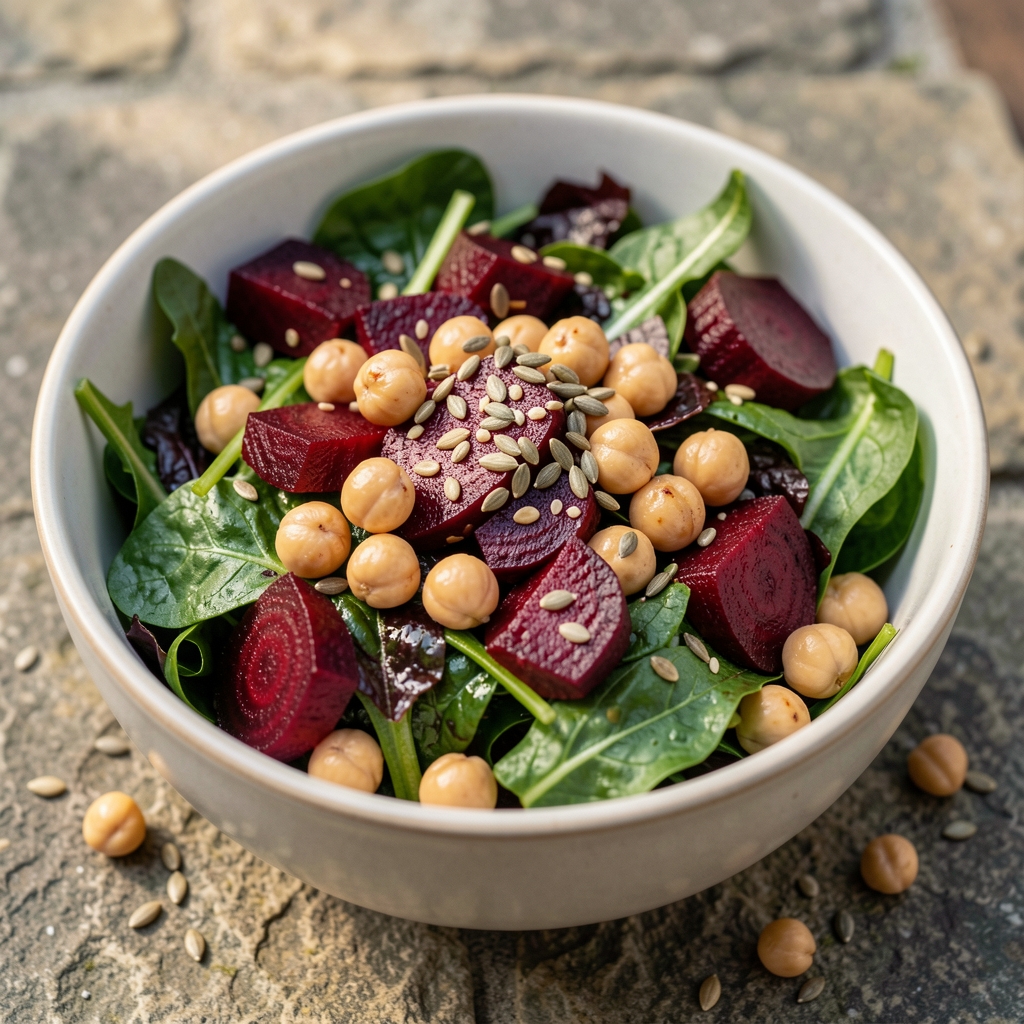
There is a logic to how a well-considered meal comes together — one that has little to do with calorie arithmetic and a great deal to do with proportion, colour, and the steady accumulation of varied ingredients across the day. Nutritional researchers have long observed that the structural composition of a meal — what sits alongside what — shapes how the body processes the whole.
What Proportion Actually Means
The idea of proportional eating is not a recent invention. Dietary guidance from institutions across the UK and further afield has, for decades, pointed toward a simple structural truth: roughly half a plate occupied by vegetables and fruits, a quarter by protein-rich foods, and a quarter by whole grains forms a reasonable daily baseline. What changes is the interpretation — whether the grain is pearl barley or brown rice, whether the protein arrives from lentils or grilled fish.
Whole foods occupy a particular position in this architecture. Unlike heavily processed alternatives, they retain their fibre matrix, their full complement of micronutrients, and the structural complexity that slows digestion in ways that support steady energy across the afternoon. A slice of wholegrain sourdough carries something that a processed white loaf does not — not in a mystical sense, but in a measurable, published-research-informed sense.
Published dietary guidelines from the NHS and the British Nutrition Foundation consistently foreground this point. The emphasis is not on restriction but on composition — what fills the plate, not what is removed from it. This is a different frame, and it shifts the experience of everyday eating considerably.
"The structural composition of a meal — what sits alongside what — shapes how the body processes the whole."
Editorial note, Gralvon Dispatch
Fibre as a Structural Element
Dietary fibre performs two broadly distinct functions. Soluble fibre — found in oats, beans, lentils, and many fruits — dissolves in water and forms a gel-like substance in the digestive tract. This slows the absorption of glucose and may support healthy cholesterol levels over time. Insoluble fibre — the kind in whole wheat, nuts, and many vegetables — adds bulk and supports the movement of material through the gut.
The UK's recommended fibre intake sits at thirty grams per day for adults, a figure that most people do not reach. Achieving it requires deliberate attention to food selection: switching from refined grains to their whole counterparts, incorporating legumes into at least a few meals each week, and treating vegetables not as an afterthought but as the structural anchor of the plate.
Gut-friendly recipes that appear in seasonal cooking publications tend to share a common quality: they are fibre-dense not by design but as a consequence of ingredient selection. A late-summer ratatouille, a winter lentil soup, a spring broad bean and mint salad — these are, structurally, high-fibre meals. The seasonal ingredient does much of the nutritional work.

A winter legume soup prepared at home. Lentils and seasonal root vegetables form a high-fibre base that sustains energy across the afternoon.
Colour as a Nutritional Indicator
Pigmentation in vegetables and fruits is not cosmetic. The deep green of spinach signals chlorophyll and folate; the orange of carrots and sweet potatoes points to beta-carotene; the red of tomatoes indicates lycopene; the purple of blueberries, blackberries, and red cabbage reflects anthocyanin content. Colour variety is, in practice, a rough proxy for micronutrient diversity.
A plate that contains three or four distinct colours — particularly across the vegetable portion — is likely to be more nutritionally varied than one built around two or three pale, starchy elements. This is not a strict rule but an observation that holds up consistently across published nutritional research. Eating by colour is a practical heuristic rather than a formal protocol.
Seasonal cooking naturally supports colour variety. Spring produces asparagus, peas, and radishes; summer brings courgettes, aubergines, and tomatoes; autumn yields root vegetables and dark leafy greens; winter emphasises brassicas, squash, and citrus. Following the seasonal market is, in this light, a modest form of nutritionist guidance encoded into the food system itself.
Hydration and the Meal Context
Hydration habits are often separated from nutrition conversations, treated as a parallel concern rather than an integrated one. Yet water-rich foods — cucumbers, celery, watermelon, leafy greens — contribute meaningfully to daily fluid intake. A diet built substantially around whole foods will, incidentally, be more hydrating than one centred on processed and dried goods.
The conventional guidance of eight glasses of water per day is a useful approximation, though individual requirements vary with body weight, activity level, and climate. What is consistent across published research is the role of adequate hydration in cognitive function, appetite regulation, and digestive transit — all of which interact with the quality and composition of meals.
Mindful eating literature frequently addresses the pace at which meals are consumed as a hydration-adjacent factor. Eating slowly, chewing thoroughly, and pausing between courses allows time for satiety signals to register — a function that is partly contingent on adequate fluid in the digestive process. The meal, in this view, is not just its ingredients but its rhythm.
- Half the plate occupied by vegetables and fruits forms a sound structural baseline for most adults.
- Whole grains retain fibre and micronutrients that refined alternatives lose in processing.
- Colour variety across vegetables is a practical proxy for micronutrient diversity.
- Seasonal produce naturally supports fibre intake and nutritional variety across the year.
- Hydration habits and meal pace interact with the body's ability to register fullness and process nutrients.
Calorie Awareness Without Arithmetic
Calorie awareness does not require calorie counting. The two are distinct practices. An individual who understands which foods are energy-dense relative to their volume — nuts, oils, processed snacks — and which are low in energy density but high in satiety — leafy greens, legumes, whole grains — possesses functional calorie awareness without tracking a single number.
Portion control, in this context, is less about measuring cups and scales than about recognising when a portion has grown relative to a baseline. Home-cooked meals afford this kind of attentiveness in a way that restaurant portions — frequently calibrated for visual generosity rather than nutritional appropriateness — do not.
Sustainable weight approach, as discussed across the current body of nutritional literature, consistently points toward this structural awareness as more durable than strict caloric restriction. Energy balance matters; but the frame through which one engages with it shapes whether that engagement persists across months and years.
Articles published on Gralvon Dispatch are editorial in nature and reflect the writers' observations on everyday wellness practices. The content is not intended as professional advice, nor as guidance for the management of any specific condition. Readers with specific concerns about their daily routines are encouraged to speak with a qualified wellness professional.